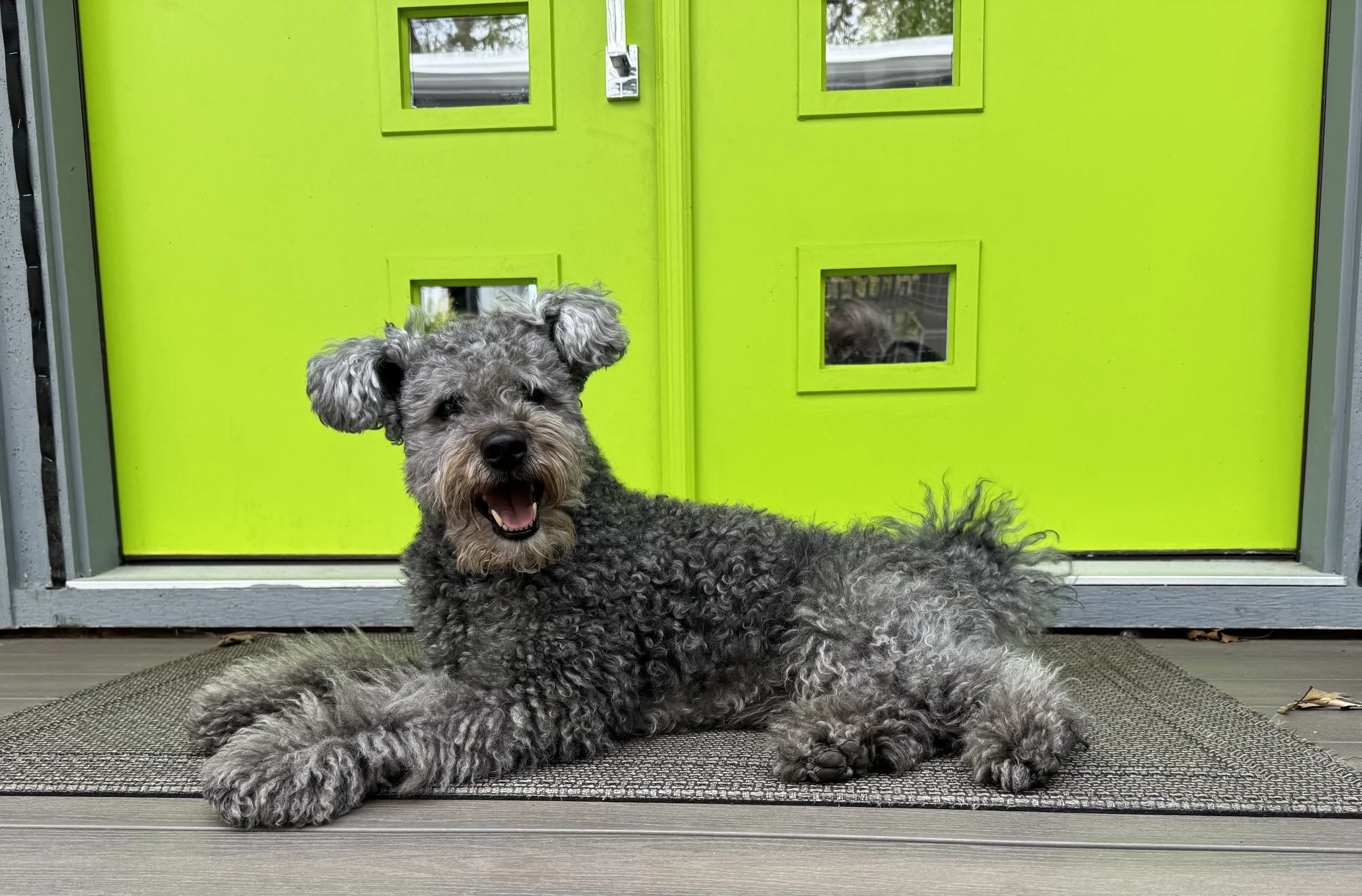
Living with a Pumi
People most often fall in love with Pumi based first upon how cute they are in pictures. It’s important to remind prospective owners that this is first and foremost a tough, intelligent, energetic herding breed. While your Pumi will be incredibly devoted to you and want to follow you everywhere in your house at all times, they need mental and physical stimulation in order to be truly happy. Pumi have an offswitch, and make great couch cuddlers, but only if you are able to provide them with the appropriate exercise.
Most Pumi love playing a game of fetch in the yard, but it is not sufficient to satisfy the mental gymnastics they need to truly relax. A food puzzle is great fun, but it is not the same thing as structured mental exercise. We recommend that all of our puppies remain in obedience classes until at least one year of age. This helps provide a consistent structure for you to follow through on with your puppy. You may have no interest in competing in obedience, rally, agility, or scentwork, but signing up for these classes at your local training facility is a great way to keep your Pumi happy.
If you do not give your Pumi something to do, they are going to find something that makes them happy, but it most likely isn’t going to be something that you want them doing. They are not an inherently destructive breed, but left to their own devices they can get up to mischief. Having another dog to play with is great, but again they want to work with you, not just play with their siblings.
The perfect home for a Pumi is a family with an active lifestyle or a commitment to providing the exercise their puppy needs to be happy. Pumi still have a very strong herding drive, so expect to see this behavior in your puppy and be prepared to direct them appropriately. Early socialization is incredibly important; the first 12 weeks of life are the most vital to preparing your puppy to live a successful life in human society. After 12 weeks of age it is not considered socialization, it is considered training. Socialization is most commonly associated with exposing your puppy to as many new environments and situations as you can, however that is not all that socialization consists of. We are not just showing our puppy new situations, we are teaching them appropriate behaviors and reactions to our normal life.